Ansen Electronics Co 0761TX Remote Temperature Sensor Transmitter User Manual 0761engIM

Ansen Electronics Co Remote Temperature Sensor Transmitter 0761engIM

Instruction Manual

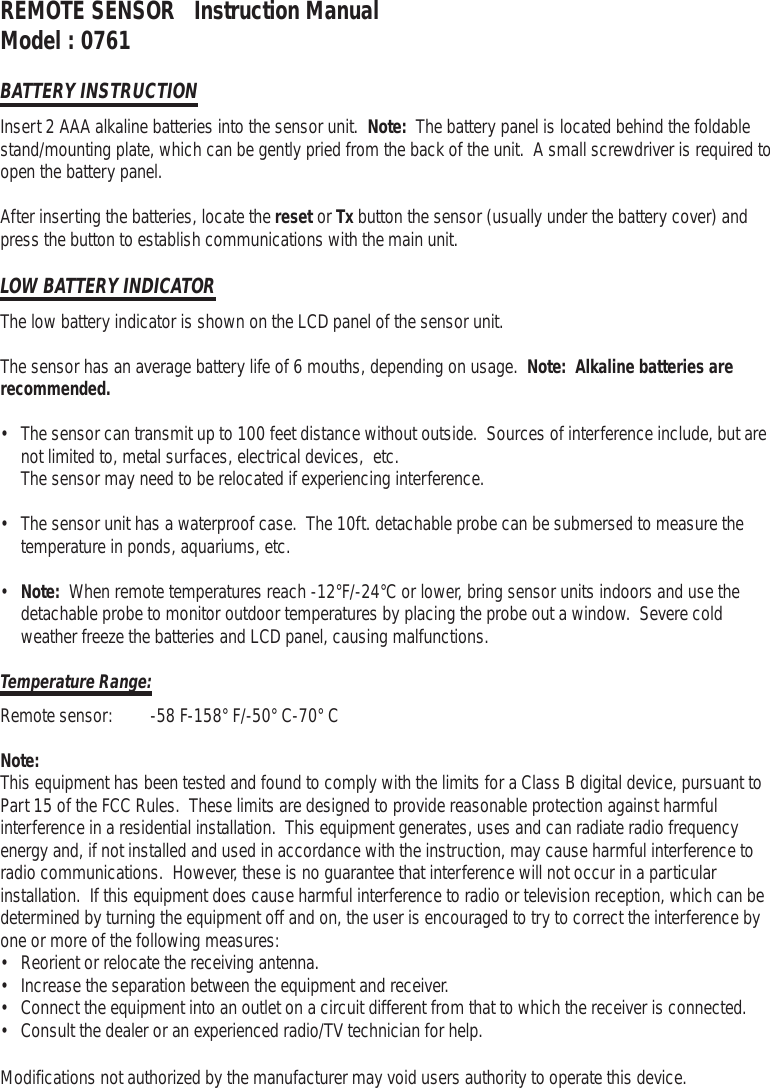
REMOTE SENSOR   Instruction ManualModel : 0761BATTERY INSTRUCTIONInsert 2 AAA alkaline batteries into the sensor unit.  Note:  The battery panel is located behind the foldablestand/mounting plate, which can be gently pried from the back of the unit.  A small screwdriver is required toopen the battery panel.After inserting the batteries, locate the reset or Tx button the sensor (usually under the battery cover) andpress the button to establish communications with the main unit.LOW BATTERY INDICATORThe low battery indicator is shown on the LCD panel of the sensor unit.The sensor has an average battery life of 6 mouths, depending on usage.  Note:  Alkaline batteries arerecommended.• The sensor can transmit up to 100 feet distance without outside.  Sources of interference include, but arenot limited to, metal surfaces, electrical devices,  etc.The sensor may need to be relocated if experiencing interference.• The sensor unit has a waterproof case.  The 10ft. detachable probe can be submersed to measure thetemperature in ponds, aquariums, etc.•Note:  When remote temperatures reach -12°F/-24°C or lower, bring sensor units indoors and use thedetachable probe to monitor outdoor temperatures by placing the probe out a window.  Severe coldweather freeze the batteries and LCD panel, causing malfunctions.Temperature Range:Remote sensor: -58 F-158° F/-50° C-70° CNote:This equipment has been tested and found to comply with the limits for a Class B digital device, pursuant toPart 15 of the FCC Rules.  These limits are designed to provide reasonable protection against harmfulinterference in a residential installation.  This equipment generates, uses and can radiate radio frequencyenergy and, if not installed and used in accordance with the instruction, may cause harmful interference toradio communications.  However, these is no guarantee that interference will not occur in a particularinstallation.  If this equipment does cause harmful interference to radio or television reception, which can bedetermined by turning the equipment off and on, the user is encouraged to try to correct the interference byone or more of the following measures:• Reorient or relocate the receiving antenna.• Increase the separation between the equipment and receiver.• Connect the equipment into an outlet on a circuit different from that to which the receiver is connected.• Consult the dealer or an experienced radio/TV technician for help.Modifications not authorized by the manufacturer may void users authority to operate this device.

Navigation menu