Foerster Technik MULTIREADER MultiReader User Manual OBJ BUCH 300 003

Foerster Technik GmbH MultiReader OBJ BUCH 300 003

user manual

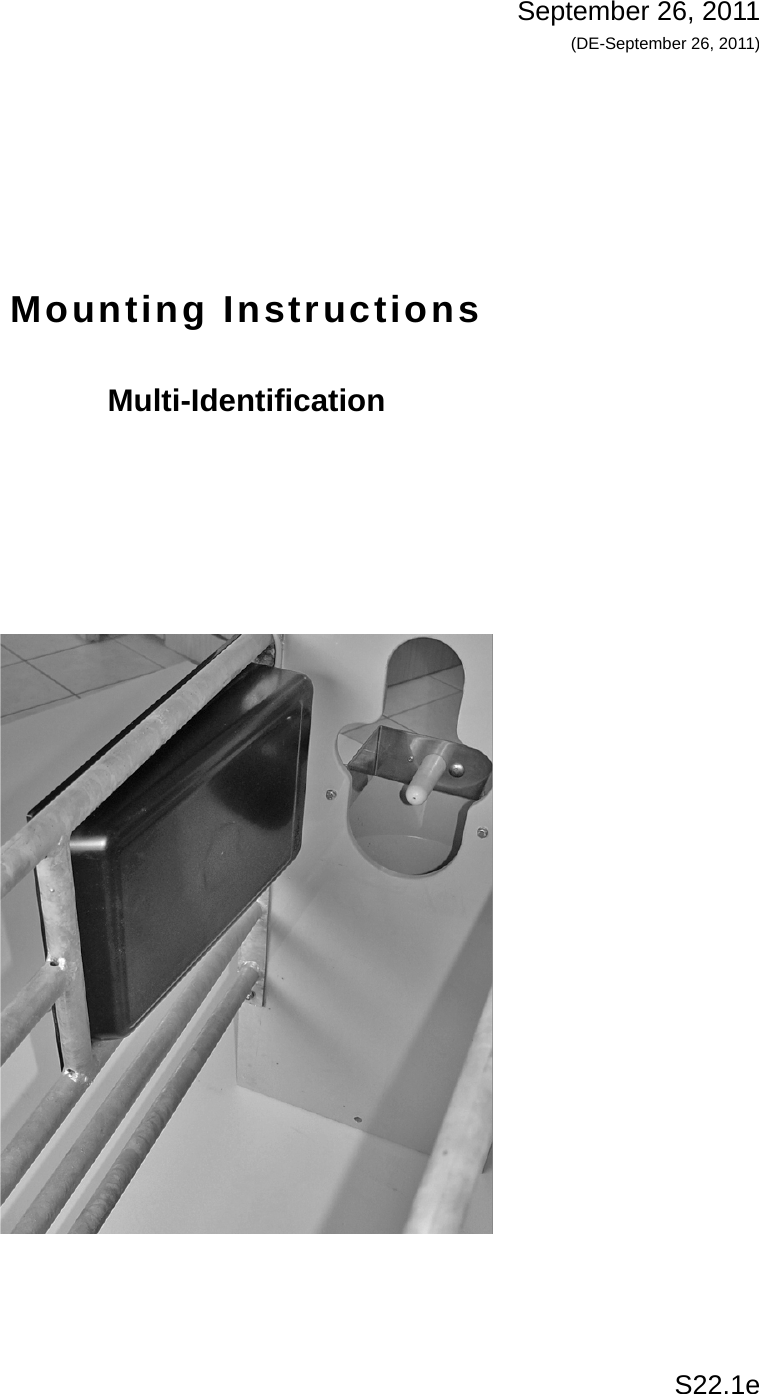
September 26, 2011 (DE-September 26, 2011)Mounting InstructionsMulti-IdentificationS22.1e
2
Table of content 3Table of content1  Introduction . . . . . . . . . . . . . . . . . . . . . . . . . . . . . . . . . . . . . . . . . . . . . . . . . . . . . . . . . . .51.1  Copyright  . . . . . . . . . . . . . . . . . . . . . . . . . . . . . . . . . . . . . . . . . . . . . . . . . . . . . . . . . . . . . . . . . . . . . . .  51.2  Disposal . . . . . . . . . . . . . . . . . . . . . . . . . . . . . . . . . . . . . . . . . . . . . . . . . . . . . . . . . . . . . . . . . . . . . . . .  51.3  Transport  . . . . . . . . . . . . . . . . . . . . . . . . . . . . . . . . . . . . . . . . . . . . . . . . . . . . . . . . . . . . . . . . . . . . . . .  51.4  Contact details of the manufacturer . . . . . . . . . . . . . . . . . . . . . . . . . . . . . . . . . . . . . . . . . . . . . . . . . . .  52  For your safety. . . . . . . . . . . . . . . . . . . . . . . . . . . . . . . . . . . . . . . . . . . . . . . . . . . . . . . . .72.1  Target group . . . . . . . . . . . . . . . . . . . . . . . . . . . . . . . . . . . . . . . . . . . . . . . . . . . . . . . . . . . . . . . . . . . . .  72.1.1  Necessary qualifications of the owner. . . . . . . . . . . . . . . . . . . . . . . . . . . . . . . . . . . . . . . . . .  72.1.2  Necessary qualifications of the service technician  . . . . . . . . . . . . . . . . . . . . . . . . . . . . . . . .  72.2  Intended use of the multi-identification unit  . . . . . . . . . . . . . . . . . . . . . . . . . . . . . . . . . . . . . . . . . . . . .  72.3  Indication of hazards. . . . . . . . . . . . . . . . . . . . . . . . . . . . . . . . . . . . . . . . . . . . . . . . . . . . . . . . . . . . . . .  72.4  Safety signs on the machine. . . . . . . . . . . . . . . . . . . . . . . . . . . . . . . . . . . . . . . . . . . . . . . . . . . . . . . . .  82.5  Obligations of the owner. . . . . . . . . . . . . . . . . . . . . . . . . . . . . . . . . . . . . . . . . . . . . . . . . . . . . . . . . . . .  92.6  Obligations of the operator . . . . . . . . . . . . . . . . . . . . . . . . . . . . . . . . . . . . . . . . . . . . . . . . . . . . . . . . . .  92.7  Structural alterations. . . . . . . . . . . . . . . . . . . . . . . . . . . . . . . . . . . . . . . . . . . . . . . . . . . . . . . . . . . . . .  103  Technical data . . . . . . . . . . . . . . . . . . . . . . . . . . . . . . . . . . . . . . . . . . . . . . . . . . . . . . . .113.1  Multi-identification. . . . . . . . . . . . . . . . . . . . . . . . . . . . . . . . . . . . . . . . . . . . . . . . . . . . . . . . . . . . . . . .  113.2  Accessories  . . . . . . . . . . . . . . . . . . . . . . . . . . . . . . . . . . . . . . . . . . . . . . . . . . . . . . . . . . . . . . . . . . . .  123.2.1  Mounting bracket (with front plate mounting)  . . . . . . . . . . . . . . . . . . . . . . . . . . . . . . . . . . .  123.3  FCC  . . . . . . . . . . . . . . . . . . . . . . . . . . . . . . . . . . . . . . . . . . . . . . . . . . . . . . . . . . . . . . . . . . . . . . . . . .  133.4  IC  . . . . . . . . . . . . . . . . . . . . . . . . . . . . . . . . . . . . . . . . . . . . . . . . . . . . . . . . . . . . . . . . . . . . . . . . . . . .  134  Putting the unit into service . . . . . . . . . . . . . . . . . . . . . . . . . . . . . . . . . . . . . . . . . . . . .154.1  Notes on installation . . . . . . . . . . . . . . . . . . . . . . . . . . . . . . . . . . . . . . . . . . . . . . . . . . . . . . . . . . . . . .  154.2  Squelch values and identification ranges . . . . . . . . . . . . . . . . . . . . . . . . . . . . . . . . . . . . . . . . . . . . . .  154.3  Installing the multi-identification unit. . . . . . . . . . . . . . . . . . . . . . . . . . . . . . . . . . . . . . . . . . . . . . . . . .  164.3.1  On front plate. . . . . . . . . . . . . . . . . . . . . . . . . . . . . . . . . . . . . . . . . . . . . . . . . . . . . . . . . . . .  174.3.2  On the left or right in the Flex100 partition  . . . . . . . . . . . . . . . . . . . . . . . . . . . . . . . . . . . . .  194.4  Connecting the multi-identification unit to the main board . . . . . . . . . . . . . . . . . . . . . . . . . . . . . . . . .  205  Diagnosis . . . . . . . . . . . . . . . . . . . . . . . . . . . . . . . . . . . . . . . . . . . . . . . . . . . . . . . . . . . .215.1  Checking the feeding boxes . . . . . . . . . . . . . . . . . . . . . . . . . . . . . . . . . . . . . . . . . . . . . . . . . . . . . . . .  216  Warnings. . . . . . . . . . . . . . . . . . . . . . . . . . . . . . . . . . . . . . . . . . . . . . . . . . . . . . . . . . . . .236.1  Identification . . . . . . . . . . . . . . . . . . . . . . . . . . . . . . . . . . . . . . . . . . . . . . . . . . . . . . . . . . . . . . . . . . . .  237  Maintenance . . . . . . . . . . . . . . . . . . . . . . . . . . . . . . . . . . . . . . . . . . . . . . . . . . . . . . . . . .257.1  Maintenance intervals and activities. . . . . . . . . . . . . . . . . . . . . . . . . . . . . . . . . . . . . . . . . . . . . . . . . .  257.1.1  Daily  . . . . . . . . . . . . . . . . . . . . . . . . . . . . . . . . . . . . . . . . . . . . . . . . . . . . . . . . . . . . . . . . . .  257.2  Care . . . . . . . . . . . . . . . . . . . . . . . . . . . . . . . . . . . . . . . . . . . . . . . . . . . . . . . . . . . . . . . . . . . . . . . . . .  25
4
Introduction 51 IntroductionThese mounting instructions put you in the position to operate the multi-identification unit safely as intended.> Please read the mounting instructions carefully before putting the multi-identification unit into service.> Keep the mounting instructions ready and available at all times and pass it on to the next user.> Observe all warnings and safety instructions in these mount-ing instructions at all times.1.1 CopyrightThe copyright for these mounting instructions is reserved by Förster-Technik.1.2 DisposalAll components, liquids and solids must be disposed of in com-pliance with the official local regulations for waste prevention and appropriate waste recycling or disposal which apply in your country. Also observe the corresponding safety data sheets.1.3 TransportThe multi-identification unit is delivered in a box with the dimen-sions 45 x 30 x 10 cm.> Check the product for visible signs of damage upon delivery and report them immediately to the carrier.1.4 Contact details of the manufacturerPlease get in touch with us if you have any questions on our products or require technical support!Please note down the item number and the serial number stated on the device to have it ready and available whenever you make a call.
6 IntroductionItem no.:Serial no.:Our contact details:Förster-Technik GmbHGerwigstr. 25D-78234 Engen, GermanyPhone: +49 / (0)7733 / 9406 - 0Fax: +49 / (0)7733 / 9406 - 99info@foerster-technik.dewww.foerster-technik.de
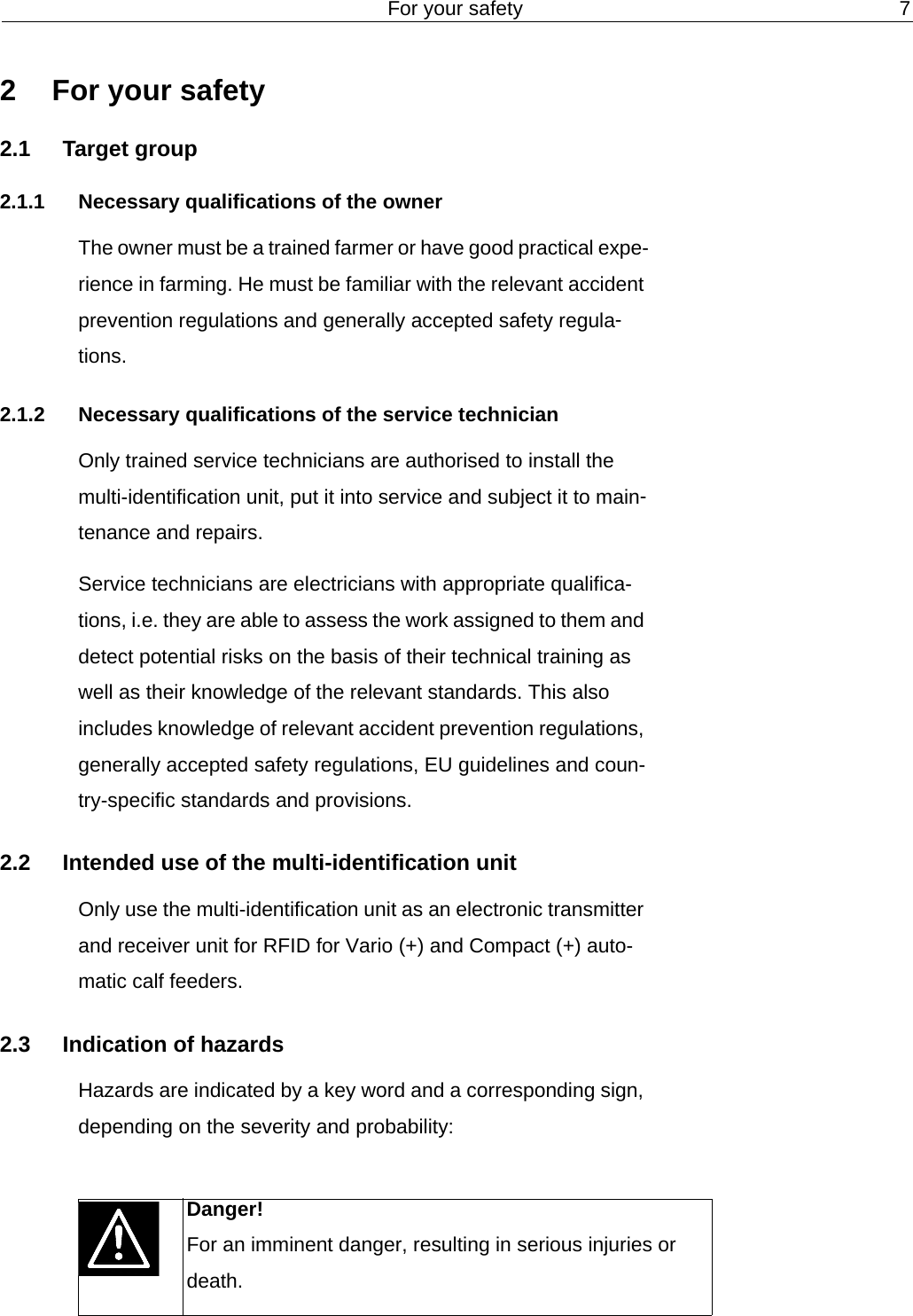
For your safety 72 For your safety2.1 Target group2.1.1 Necessary qualifications of the ownerThe owner must be a trained farmer or have good practical expe-rience in farming. He must be familiar with the relevant accident prevention regulations and generally accepted safety regula-tions.2.1.2 Necessary qualifications of the service technicianOnly trained service technicians are authorised to install the multi-identification unit, put it into service and subject it to main-tenance and repairs.Service technicians are electricians with appropriate qualifica-tions, i.e. they are able to assess the work assigned to them and detect potential risks on the basis of their technical training as well as their knowledge of the relevant standards. This also includes knowledge of relevant accident prevention regulations, generally accepted safety regulations, EU guidelines and coun-try-specific standards and provisions.2.2 Intended use of the multi-identification unitOnly use the multi-identification unit as an electronic transmitter and receiver unit for RFID for Vario (+) and Compact (+) auto-matic calf feeders.2.3 Indication of hazardsHazards are indicated by a key word and a corresponding sign, depending on the severity and probability:Danger!For an imminent danger, resulting in serious injuries or death.
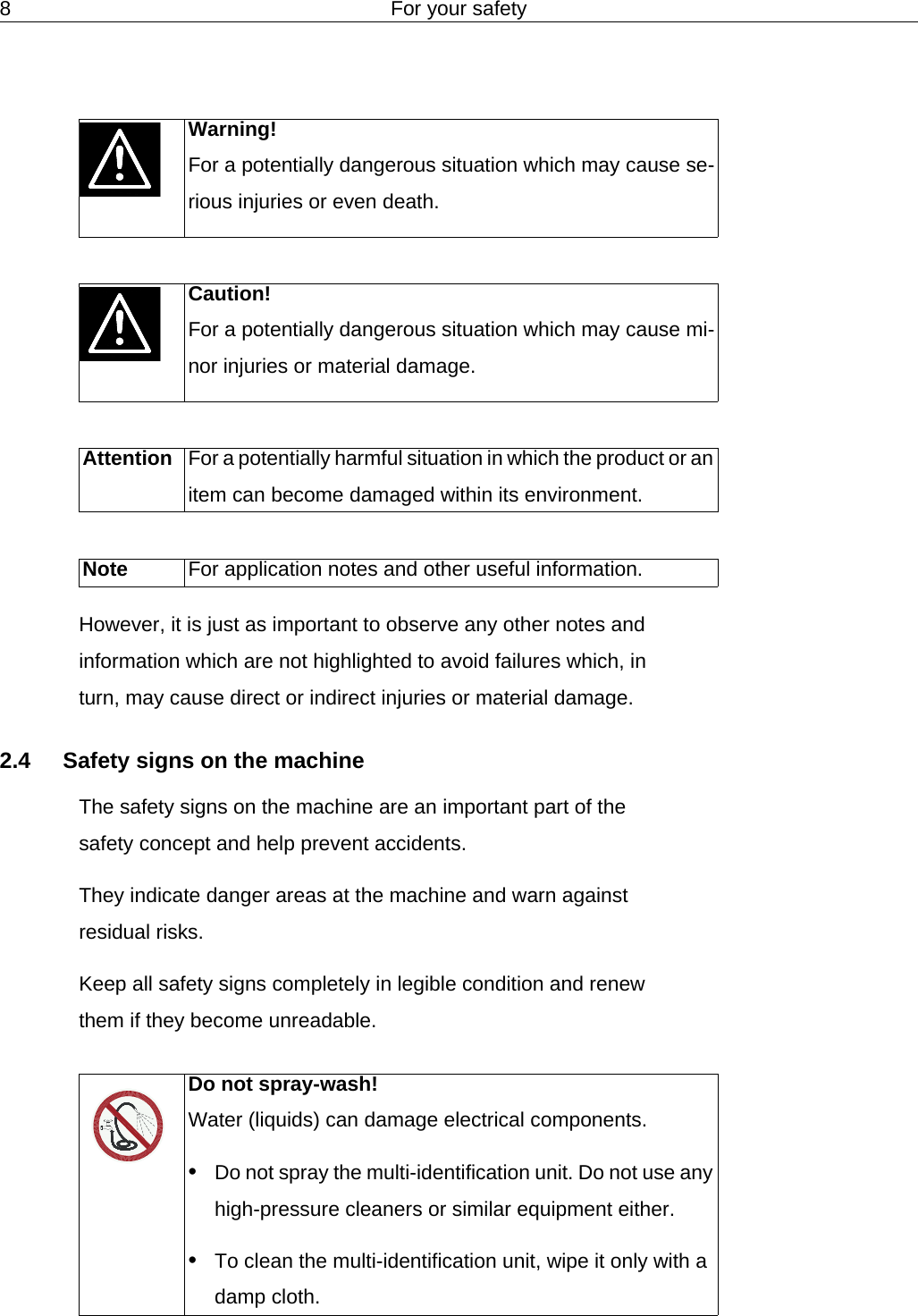
8 For your safetyHowever, it is just as important to observe any other notes and information which are not highlighted to avoid failures which, in turn, may cause direct or indirect injuries or material damage.2.4 Safety signs on the machineThe safety signs on the machine are an important part of the safety concept and help prevent accidents.They indicate danger areas at the machine and warn against residual risks.Keep all safety signs completely in legible condition and renew them if they become unreadable.Warning!For a potentially dangerous situation which may cause se-rious injuries or even death.Caution!For a potentially dangerous situation which may cause mi-nor injuries or material damage.Attention For a potentially harmful situation in which the product or an item can become damaged within its environment.Note For application notes and other useful information.Do not spray-wash!Water (liquids) can damage electrical components.•Do not spray the multi-identification unit. Do not use any high-pressure cleaners or similar equipment either.•To clean the multi-identification unit, wipe it only with a damp cloth.
For your safety 92.5 Obligations of the ownerThe owner is obliged to:•Rule out misuse by children,•Carefully read and understand these mounting instructions before putting the multi-identification unit into service, •Only allow operating personnel to work with/on the multi-iden-tification unit who:•Are familiar with the basic operational safety and acci-dent prevention regulations,•Have been given instructions on work with/on the multi-identification unit,•Have read and understood these mounting instructions,•Operate the multi-identification unit only as intended,•Do not change the design or functions of the multi-identifica-tion unit,•Operate the multi-identification unit only in perfect functional condition,•Subject the multi-identification unit to regular visual inspection for possible damage and have it rectified by a service techni-cian if necessary,•Make sure the multi-identification unit's connection point is easy to access at all times,•Make sure the multi-identification unit is mounted at the point intended,•Protect the multi-identification unit and the corresponding ca-ble from exposure to sunlight.2.6 Obligations of the operatorBefore beginning work, the operator is obliged to:
10 For your safety•Observe the basic operational safety and accident prevention regulations,•Read and understand these mounting instructions,•Observe all the safety information and instructions included in these mounting instructions.The compulsory accident prevention regulations which apply at the operation site in the country of use and the technical rules for safety-related and specialist work must also be observed by all means.2.7 Structural alterationsThe multi-identification unit must not be subjected to any unau-thorised alterations at any time.Only original spare parts, wear parts and accessories may be used, since any warranty claims will otherwise expire.
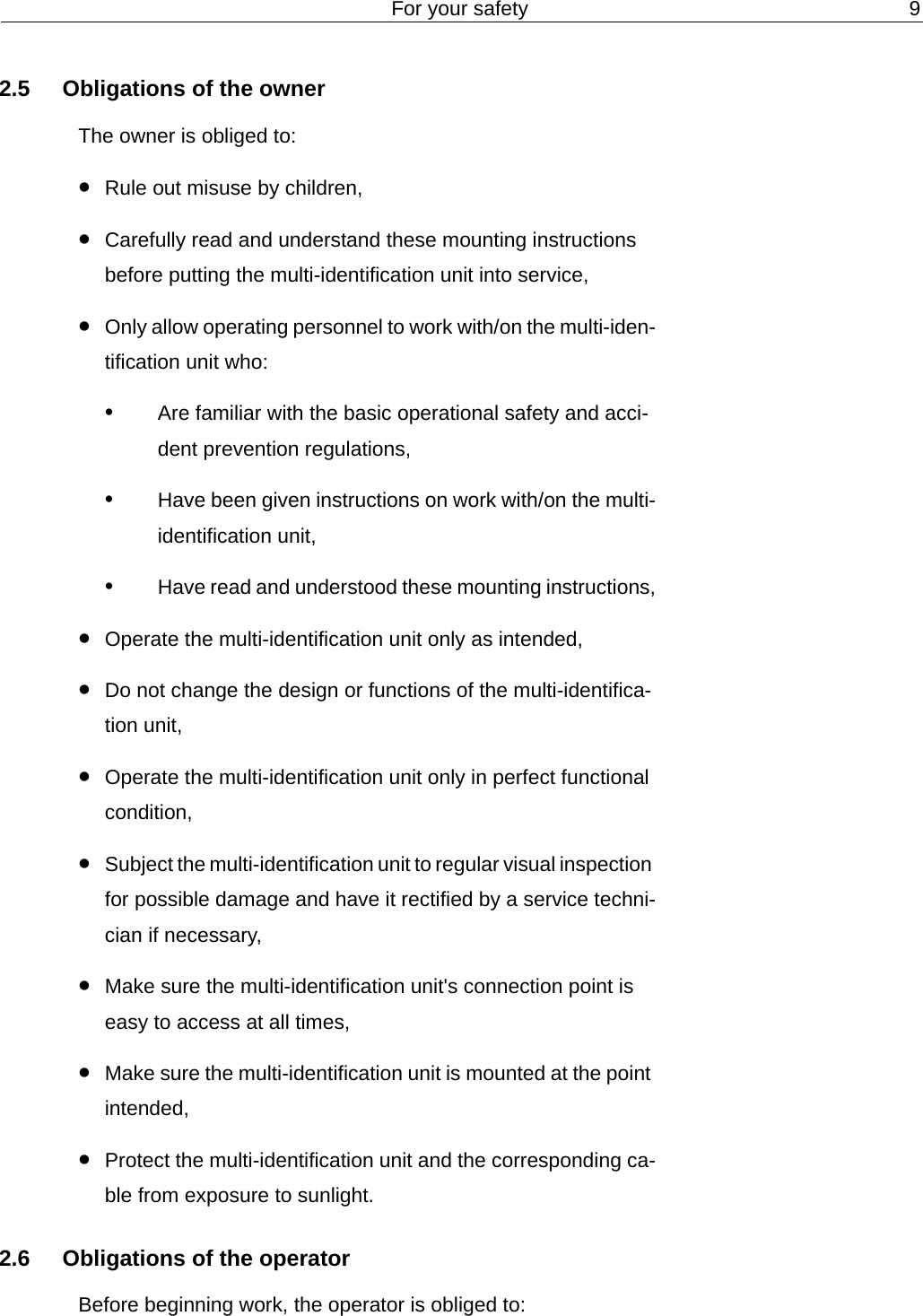
Technical data 113 Technical data3.1 Multi-identificationHeight: 430 mmWidth: 300 mmDepth: 100 mm
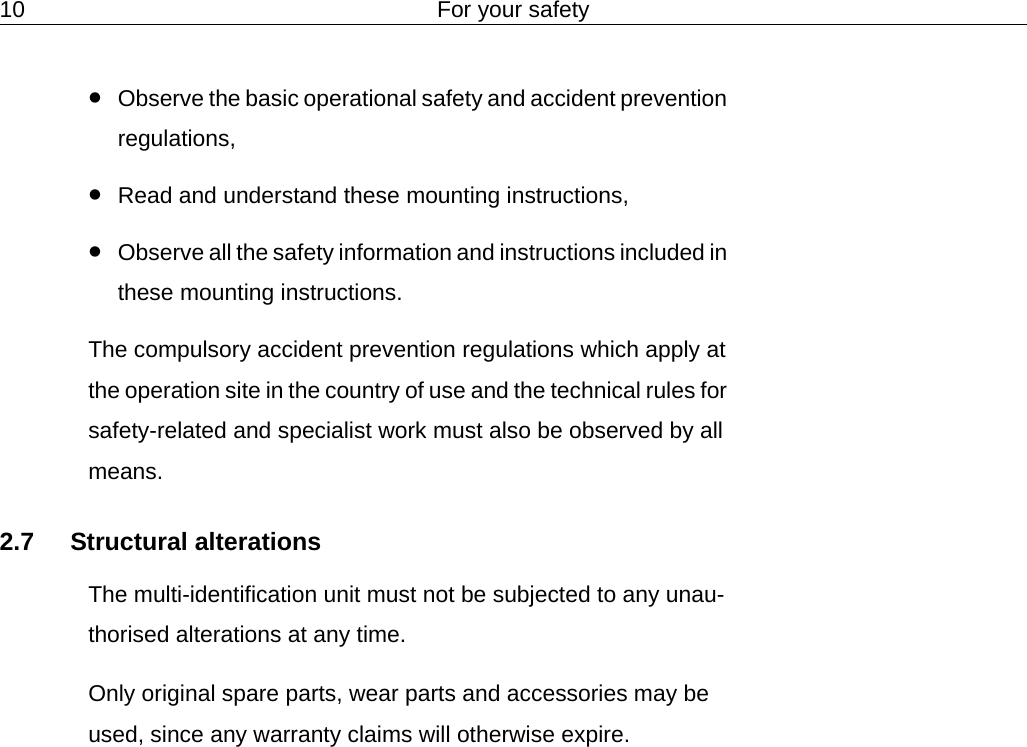
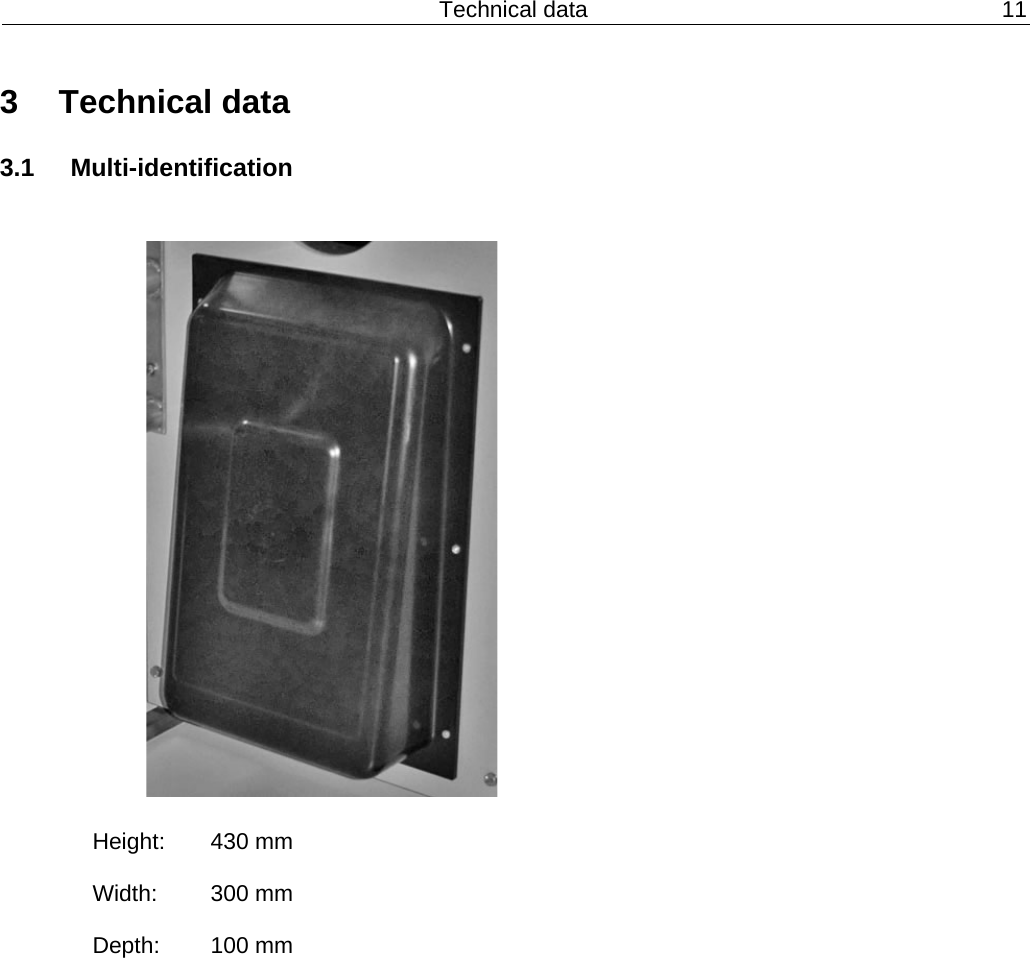
12 Technical data3.2 Accessories3.2.1 Mounting bracket (with front plate mounting)3.2.1.1 Scope of delivery of the mounting bracket21341 Upper mounting bracket 3 Washers (6x)2 Lower mounting bracket 4 Fillister head screws (6x)
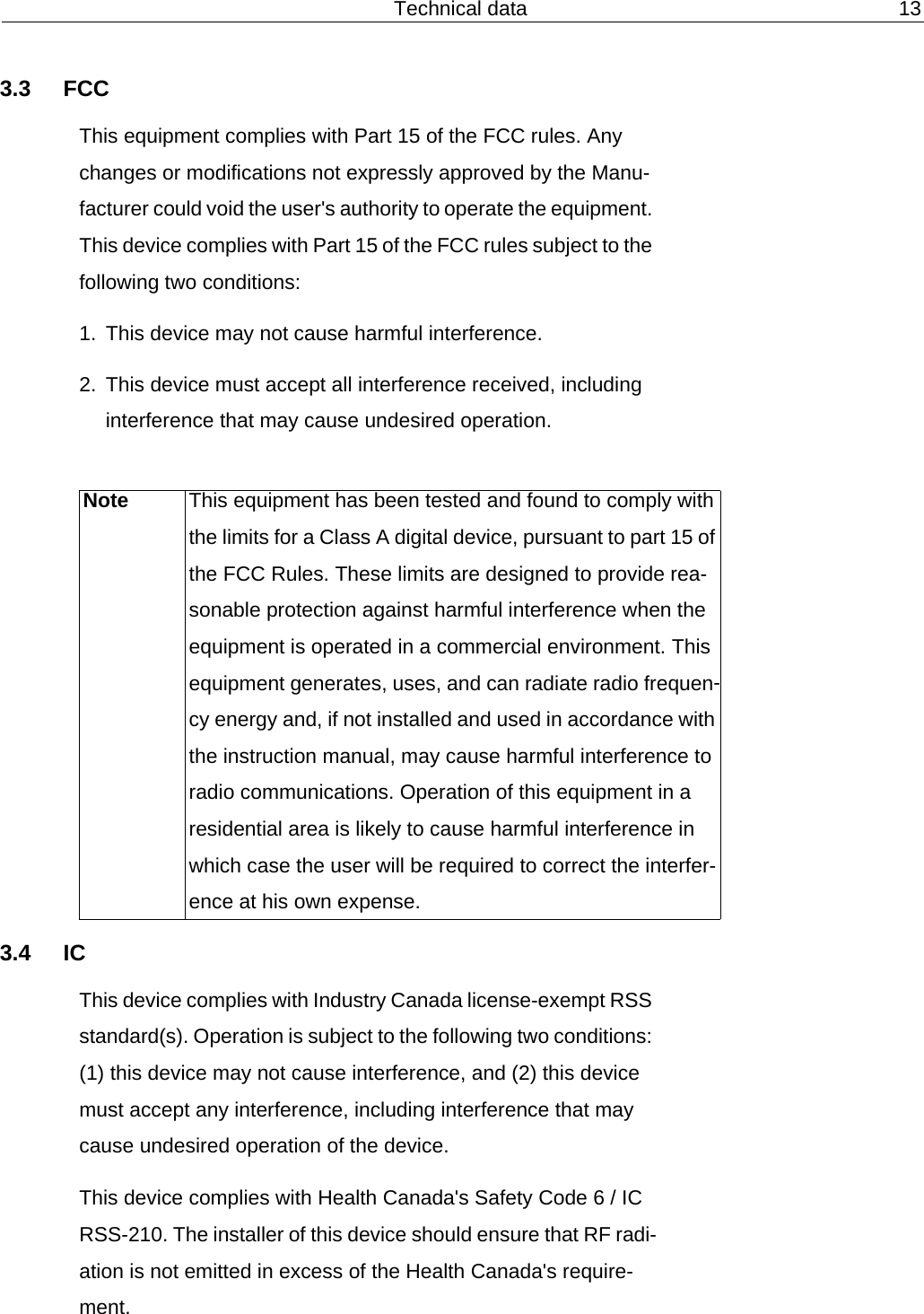
Technical data 133.3 FCCThis equipment complies with Part 15 of the FCC rules. Any changes or modifications not expressly approved by the Manu-facturer could void the user's authority to operate the equipment. This device complies with Part 15 of the FCC rules subject to the following two conditions: 1. This device may not cause harmful interference.2. This device must accept all interference received, including interference that may cause undesired operation.3.4 ICThis device complies with Industry Canada license-exempt RSS standard(s). Operation is subject to the following two conditions: (1) this device may not cause interference, and (2) this device must accept any interference, including interference that may cause undesired operation of the device.This device complies with Health Canada's Safety Code 6 / IC RSS-210. The installer of this device should ensure that RF radi-ation is not emitted in excess of the Health Canada's require-ment.Note This equipment has been tested and found to comply with the limits for a Class A digital device, pursuant to part 15 of the FCC Rules. These limits are designed to provide rea-sonable protection against harmful interference when the equipment is operated in a commercial environment. This equipment generates, uses, and can radiate radio frequen-cy energy and, if not installed and used in accordance with the instruction manual, may cause harmful interference to radio communications. Operation of this equipment in a residential area is likely to cause harmful interference in which case the user will be required to correct the interfer-ence at his own expense.
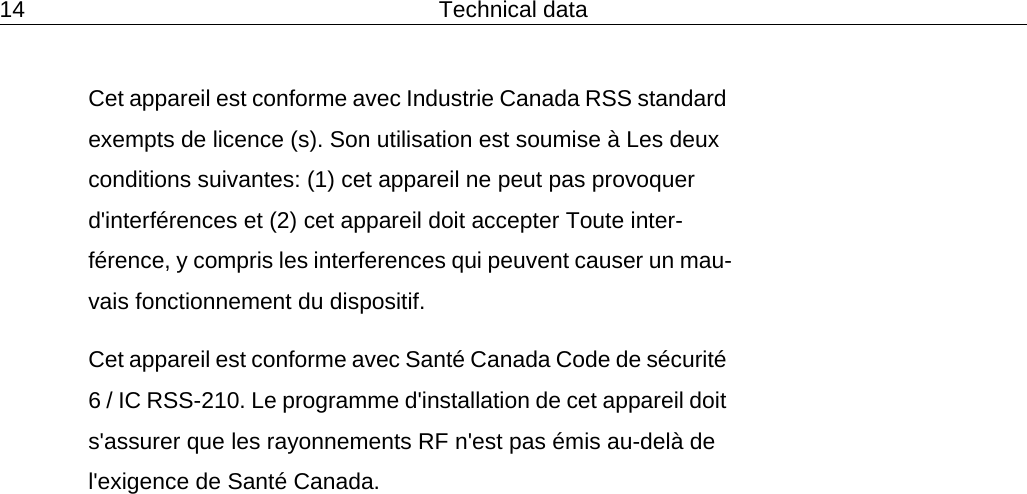
14 Technical dataCet appareil est conforme avec Industrie Canada RSS standard exempts de licence (s). Son utilisation est soumise à Les deux conditions suivantes: (1) cet appareil ne peut pas provoquer d'interférences et (2) cet appareil doit accepter Toute inter-férence, y compris les interferences qui peuvent causer un mau-vais fonctionnement du dispositif. Cet appareil est conforme avec Santé Canada Code de sécurité 6 / IC RSS-210. Le programme d'installation de cet appareil doit s'assurer que les rayonnements RF n'est pas émis au-delà de l'exigence de Santé Canada.
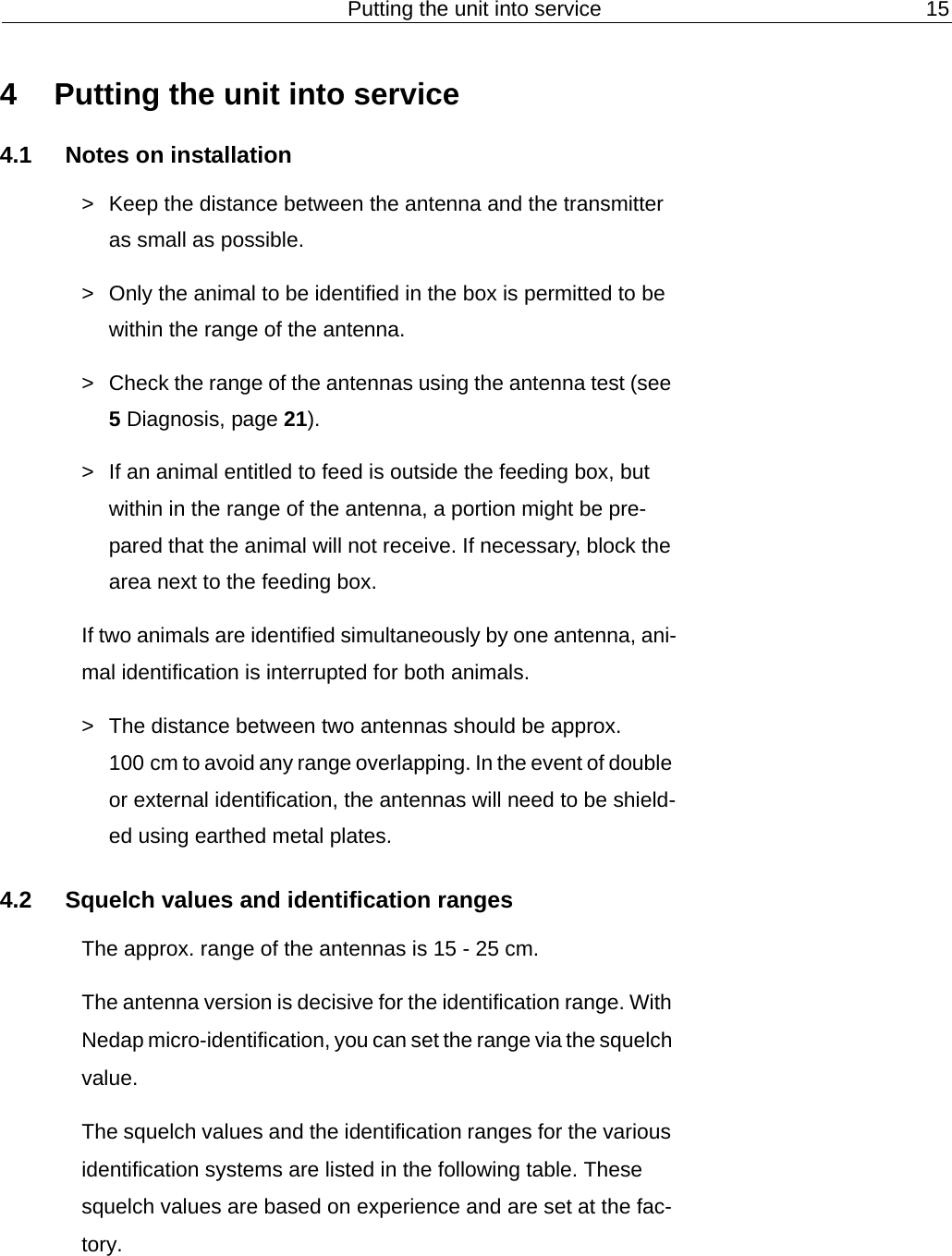
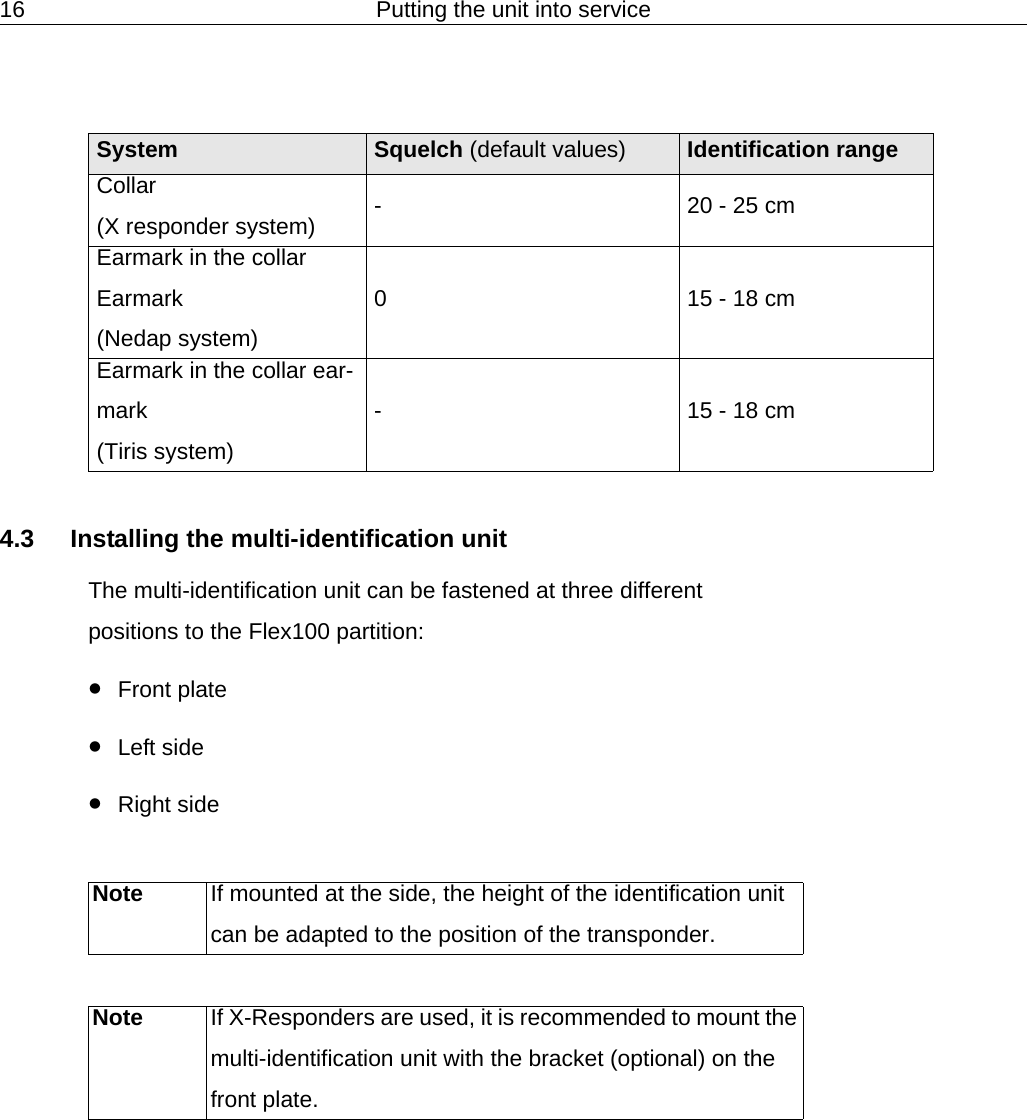
Putting the unit into service 154 Putting the unit into service4.1 Notes on installation> Keep the distance between the antenna and the transmitter as small as possible.> Only the animal to be identified in the box is permitted to be within the range of the antenna.> Check the range of the antennas using the antenna test (see 5 Diagnosis, page 21).> If an animal entitled to feed is outside the feeding box, but within in the range of the antenna, a portion might be pre-pared that the animal will not receive. If necessary, block the area next to the feeding box. If two animals are identified simultaneously by one antenna, ani-mal identification is interrupted for both animals.> The distance between two antennas should be approx. 100 cm to avoid any range overlapping. In the event of double or external identification, the antennas will need to be shield-ed using earthed metal plates.4.2 Squelch values and identification rangesThe approx. range of the antennas is 15 - 25 cm. The antenna version is decisive for the identification range. With Nedap micro-identification, you can set the range via the squelch value.The squelch values and the identification ranges for the various identification systems are listed in the following table. These squelch values are based on experience and are set at the fac-tory.
16 Putting the unit into service4.3 Installing the multi-identification unitThe multi-identification unit can be fastened at three different positions to the Flex100 partition:•Front plate•Left side•Right sideSystem Squelch (default values) Identification rangeCollar (X responder system) -20 - 25 cmEarmark in the collar Earmark (Nedap system)015 - 18 cmEarmark in the collar ear-mark (Tiris system)-15 - 18 cmNote If mounted at the side, the height of the identification unit can be adapted to the position of the transponder.Note If X-Responders are used, it is recommended to mount the multi-identification unit with the bracket (optional) on the front plate.
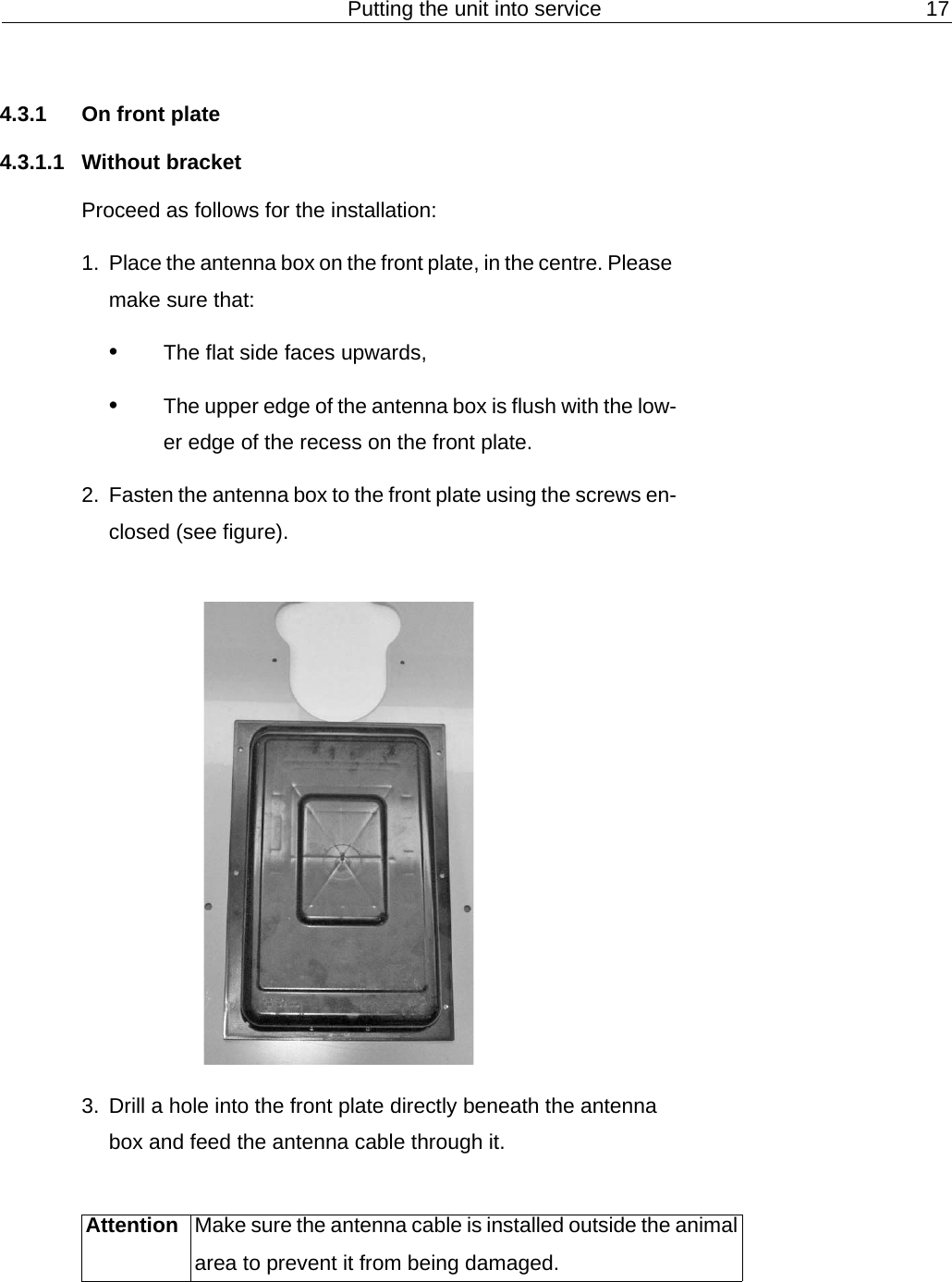
Putting the unit into service 174.3.1 On front plate4.3.1.1 Without bracketProceed as follows for the installation:1. Place the antenna box on the front plate, in the centre. Please make sure that:•The flat side faces upwards,•The upper edge of the antenna box is flush with the low-er edge of the recess on the front plate.2. Fasten the antenna box to the front plate using the screws en-closed (see figure).3. Drill a hole into the front plate directly beneath the antenna box and feed the antenna cable through it.Attention Make sure the antenna cable is installed outside the animal area to prevent it from being damaged.
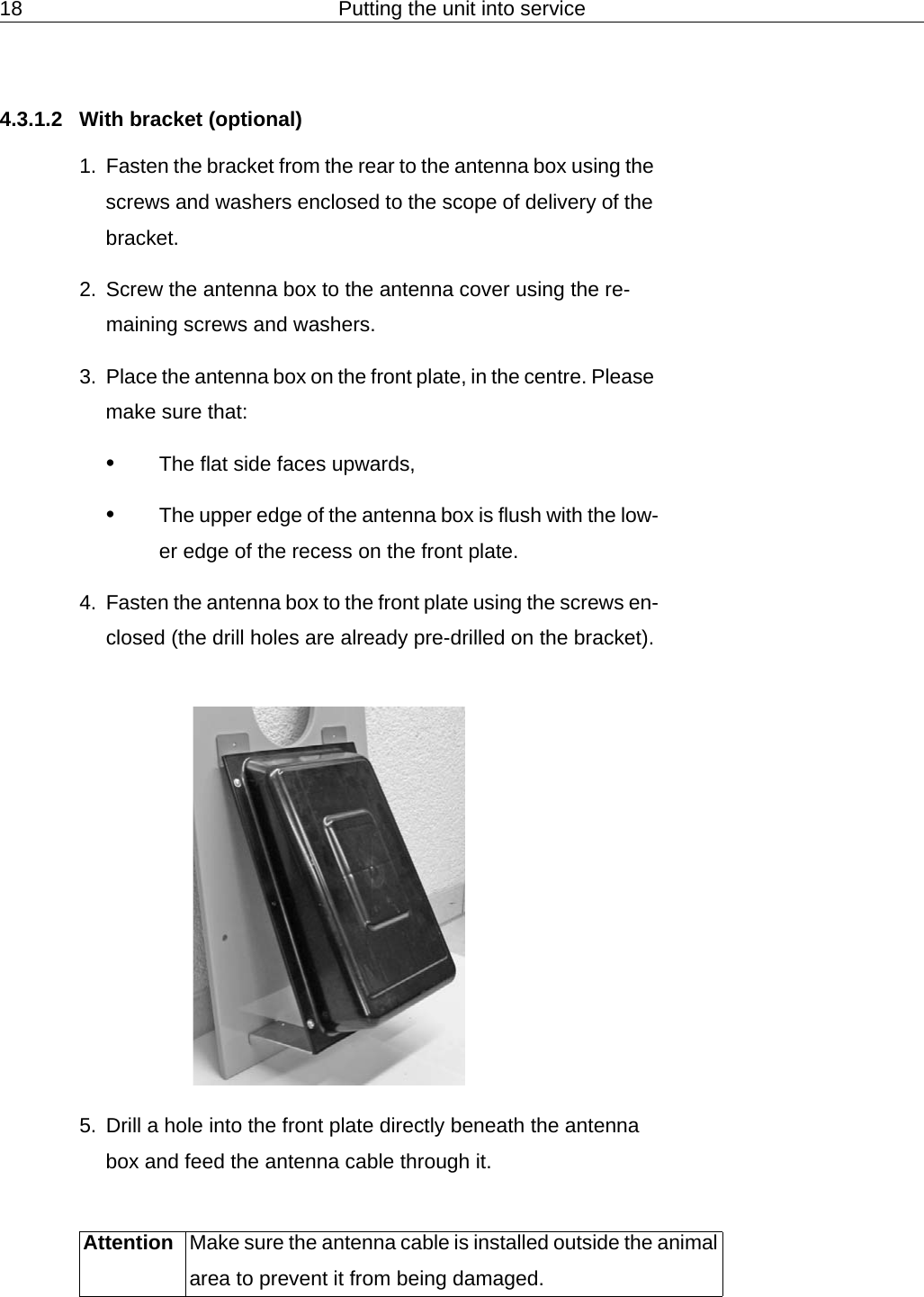
18 Putting the unit into service4.3.1.2 With bracket (optional)1. Fasten the bracket from the rear to the antenna box using the screws and washers enclosed to the scope of delivery of the bracket.2. Screw the antenna box to the antenna cover using the re-maining screws and washers.3. Place the antenna box on the front plate, in the centre. Please make sure that:•The flat side faces upwards,•The upper edge of the antenna box is flush with the low-er edge of the recess on the front plate.4. Fasten the antenna box to the front plate using the screws en-closed (the drill holes are already pre-drilled on the bracket).5. Drill a hole into the front plate directly beneath the antenna box and feed the antenna cable through it.Attention Make sure the antenna cable is installed outside the animal area to prevent it from being damaged.
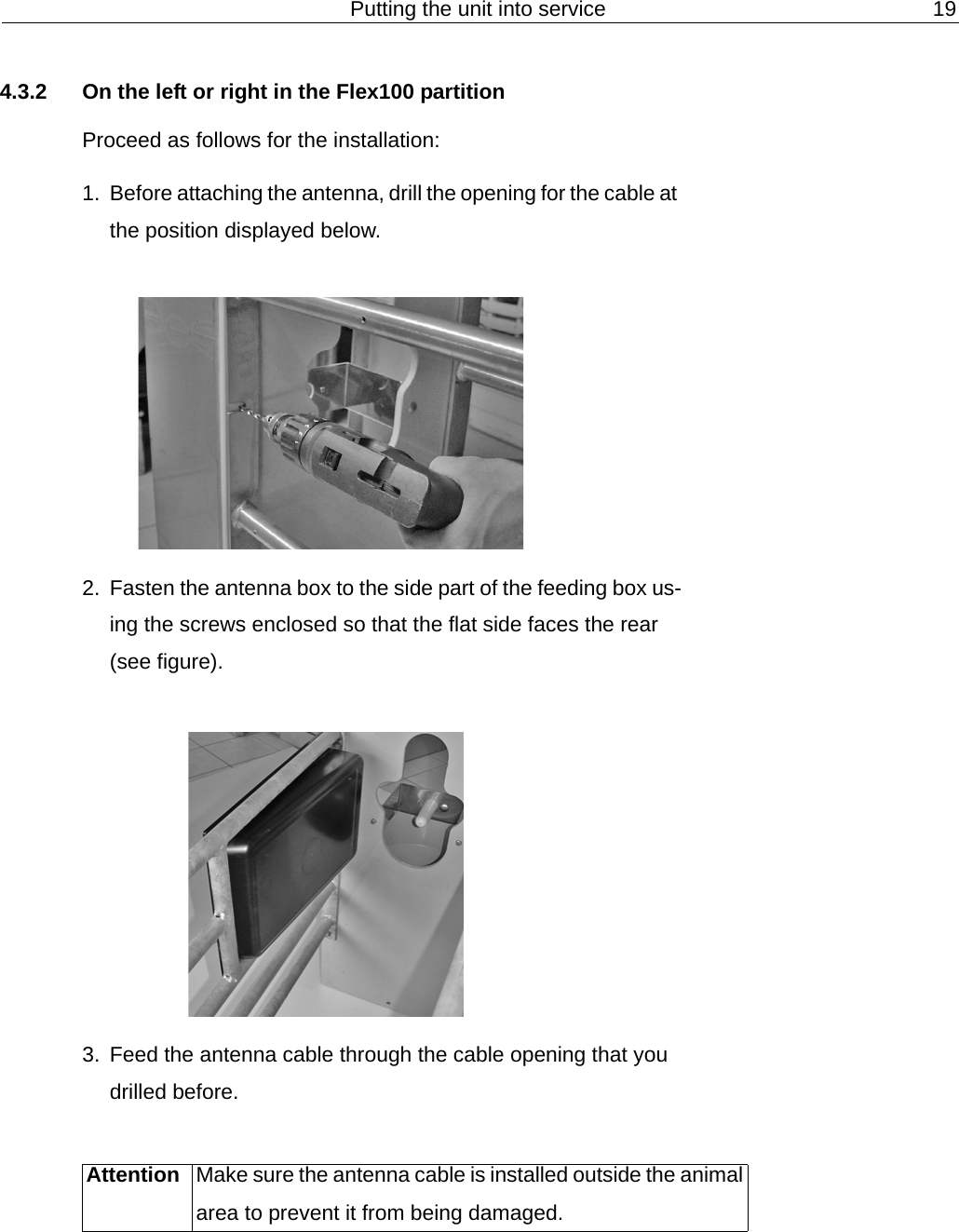
Putting the unit into service 194.3.2 On the left or right in the Flex100 partitionProceed as follows for the installation:1. Before attaching the antenna, drill the opening for the cable at the position displayed below.2. Fasten the antenna box to the side part of the feeding box us-ing the screws enclosed so that the flat side faces the rear (see figure).3. Feed the antenna cable through the cable opening that you drilled before.Attention Make sure the antenna cable is installed outside the animal area to prevent it from being damaged.
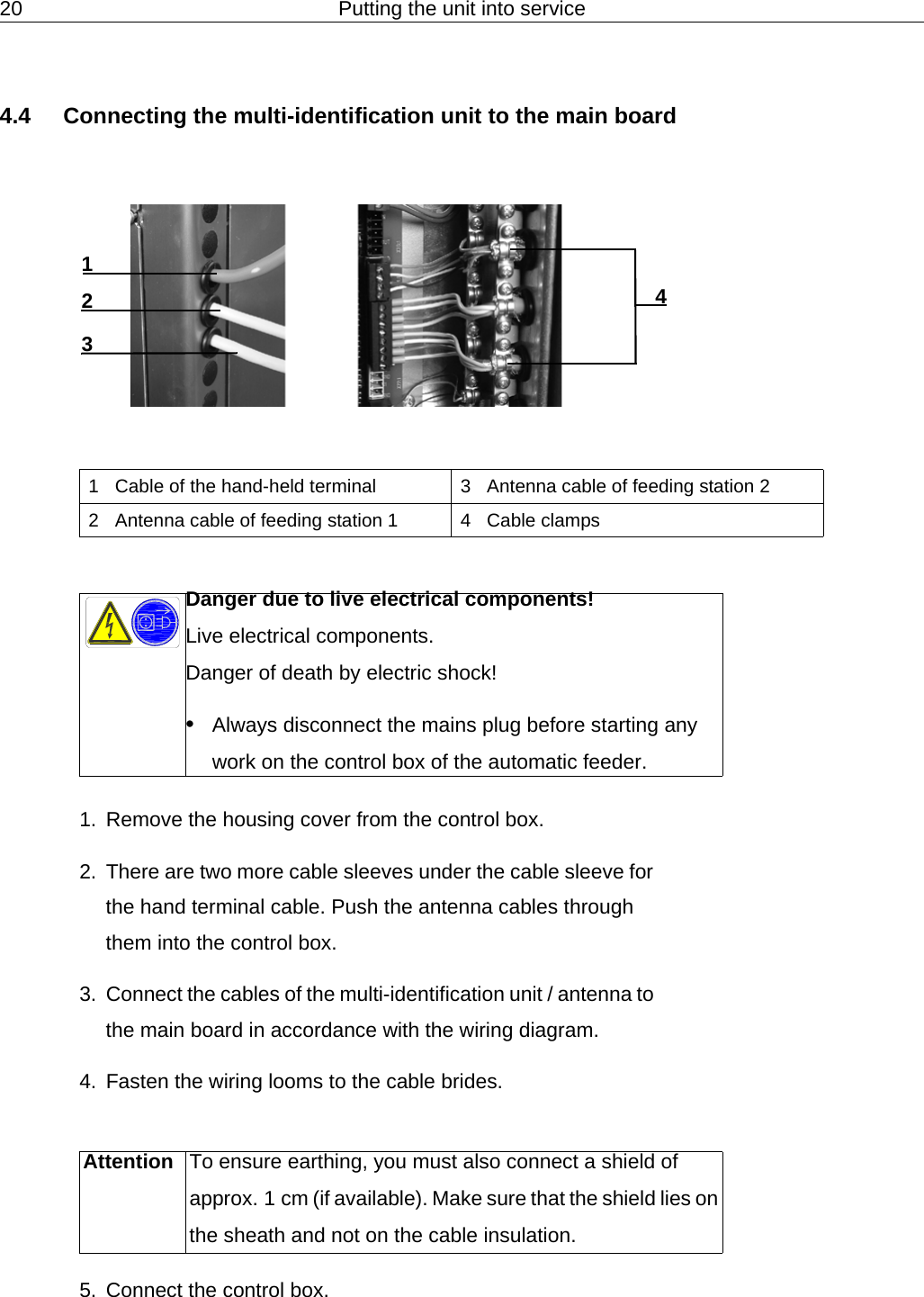
20 Putting the unit into service4.4 Connecting the multi-identification unit to the main board1. Remove the housing cover from the control box.2. There are two more cable sleeves under the cable sleeve for the hand terminal cable. Push the antenna cables through them into the control box.3. Connect the cables of the multi-identification unit / antenna to the main board in accordance with the wiring diagram.4. Fasten the wiring looms to the cable brides.5. Connect the control box.41321 Cable of the hand-held terminal 3 Antenna cable of feeding station 22 Antenna cable of feeding station 1 4 Cable clampsDanger due to live electrical components!Live electrical components.Danger of death by electric shock!•Always disconnect the mains plug before starting any work on the control box of the automatic feeder.Attention To ensure earthing, you must also connect a shield of approx. 1 cm (if available). Make sure that the shield lies on the sheath and not on the cable insulation.
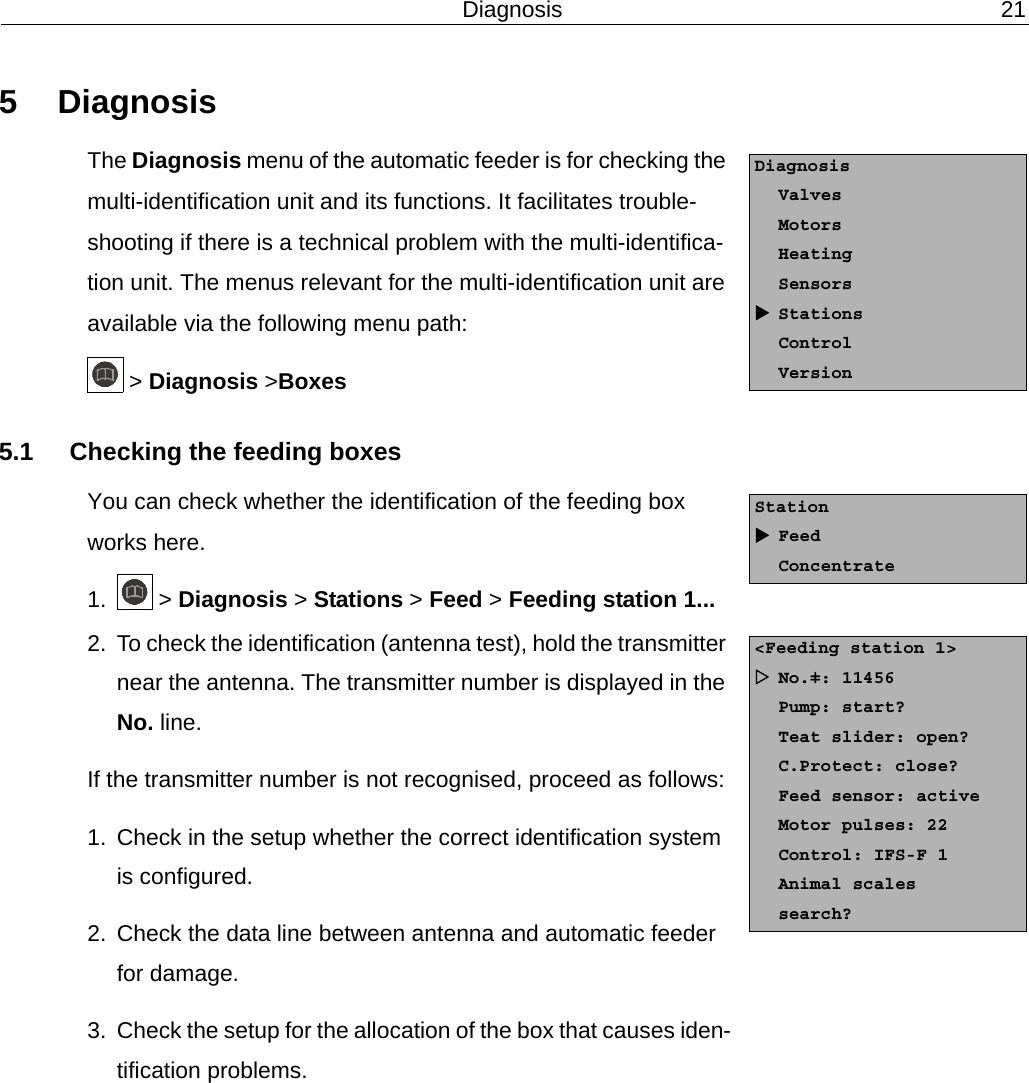
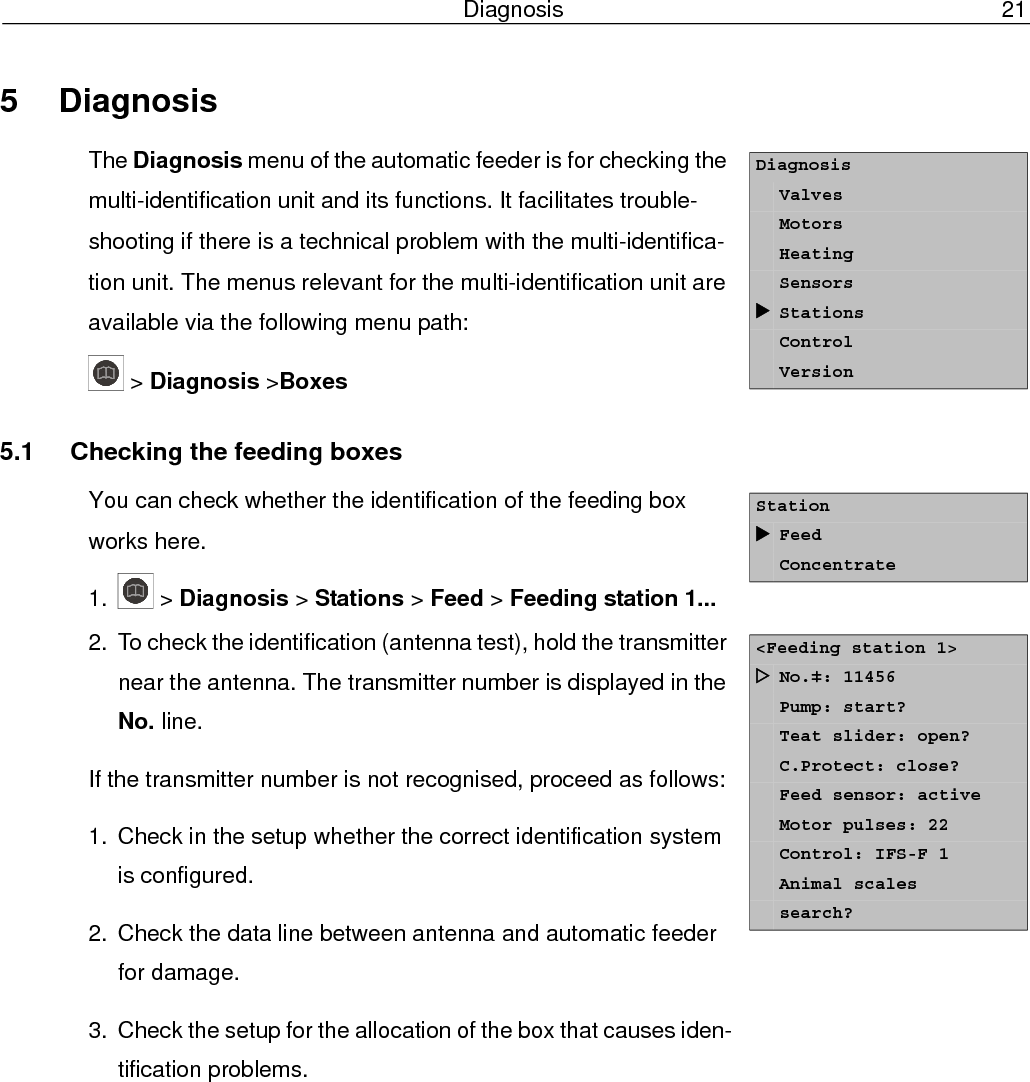
Diagnosis 215 DiagnosisThe Diagnosis menu of the automatic feeder is for checking the multi-identification unit and its functions. It facilitates trouble-shooting if there is a technical problem with the multi-identifica-tion unit. The menus relevant for the multi-identification unit are available via the following menu path: > Diagnosis >Boxes5.1 Checking the feeding boxesYou can check whether the identification of the feeding box works here.1.  > Diagnosis > Stations > Feed > Feeding station 1...2. To check the identification (antenna test), hold the transmitter near the antenna. The transmitter number is displayed in the No. line.If the transmitter number is not recognised, proceed as follows:1. Check in the setup whether the correct identification system is configured.2. Check the data line between antenna and automatic feeder for damage.3. Check the setup for the allocation of the box that causes iden-tification problems.DiagnosisValvesMotorsHeatingSensorsStationsControlVersionStationFeedConcentrate<Feeding station 1>No.ǂ: 11456Pump: start?Teat slider: open?C.Protect: close?Feed sensor: activeMotor pulses: 22Control: IFS-F 1Animal scalessearch?
22 Diagnosis
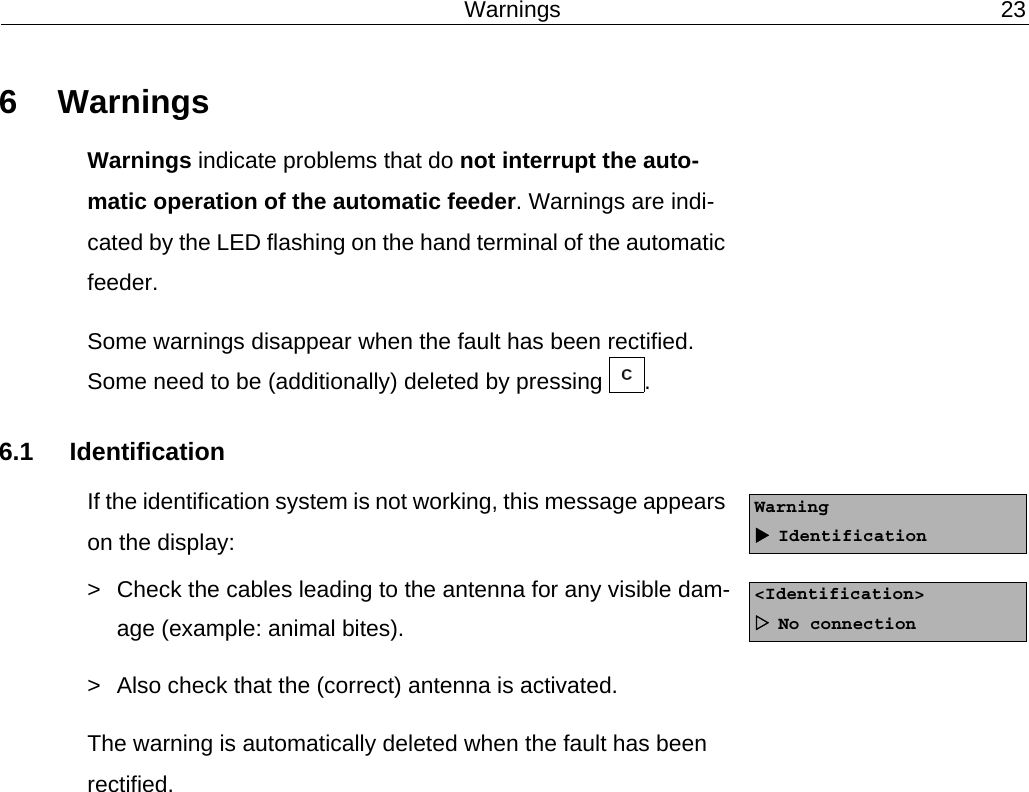
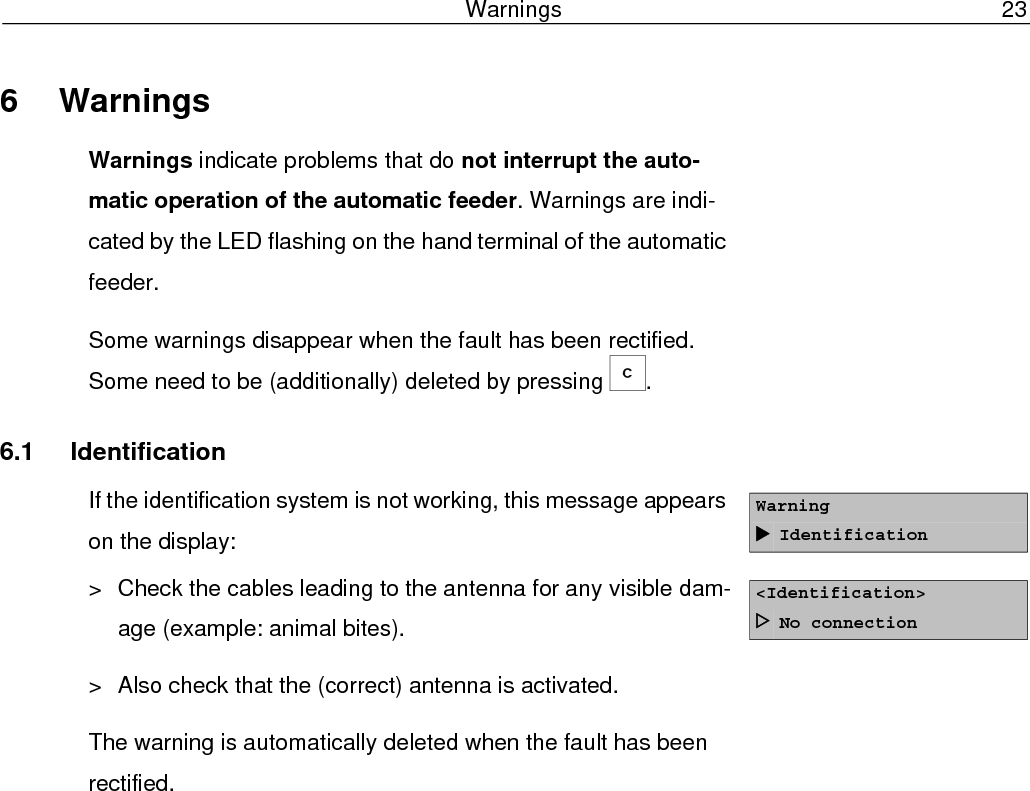
Warnings 236 WarningsWarnings indicate problems that do not interrupt the auto-matic operation of the automatic feeder. Warnings are indi-cated by the LED flashing on the hand terminal of the automatic feeder.Some warnings disappear when the fault has been rectified. Some need to be (additionally) deleted by pressing  .6.1 IdentificationIf the identification system is not working, this message appears on the display:> Check the cables leading to the antenna for any visible dam-age (example: animal bites).> Also check that the (correct) antenna is activated.The warning is automatically deleted when the fault has been rectified.WarningIdentification<Identification>No connection
24 Warnings
Maintenance 257 MaintenanceThe visual inspection of the components can be conducted by the owner/operator.Repair work must always be performed by a service technician.7.1 Maintenance intervals and activities7.1.1 DailyVisual inspection of the componentsAll components must be checked visually every day for damage and deposits. If any damage is detected during the visual inspec-tion, the faulty components have to be replaced by a service technician before work can be resumed with the multi-identifica-tion unit.7.2 CareYou should have dirt removed from the multi-identification unit from time to time. However, soiling does not have any negative effects on the identification results.Note If you detect any faults or damage to the multi-identification unit between the maintenance intervals recommended be-low, you must make sure they are rectified immediately by a service technician as required.Do not spray-wash!Water (liquids) can damage electrical components.•Do not spray-wash the multi-identification unit. Do not use any high-pressure cleaners or similar equipment ei-ther.•To clean the multi-identification unit, only wipe it with a damp cloth.
26 Maintenance

Navigation menu